
Is This Normal Toddler Behavior , Or Why Does My Child Melt Down After School?
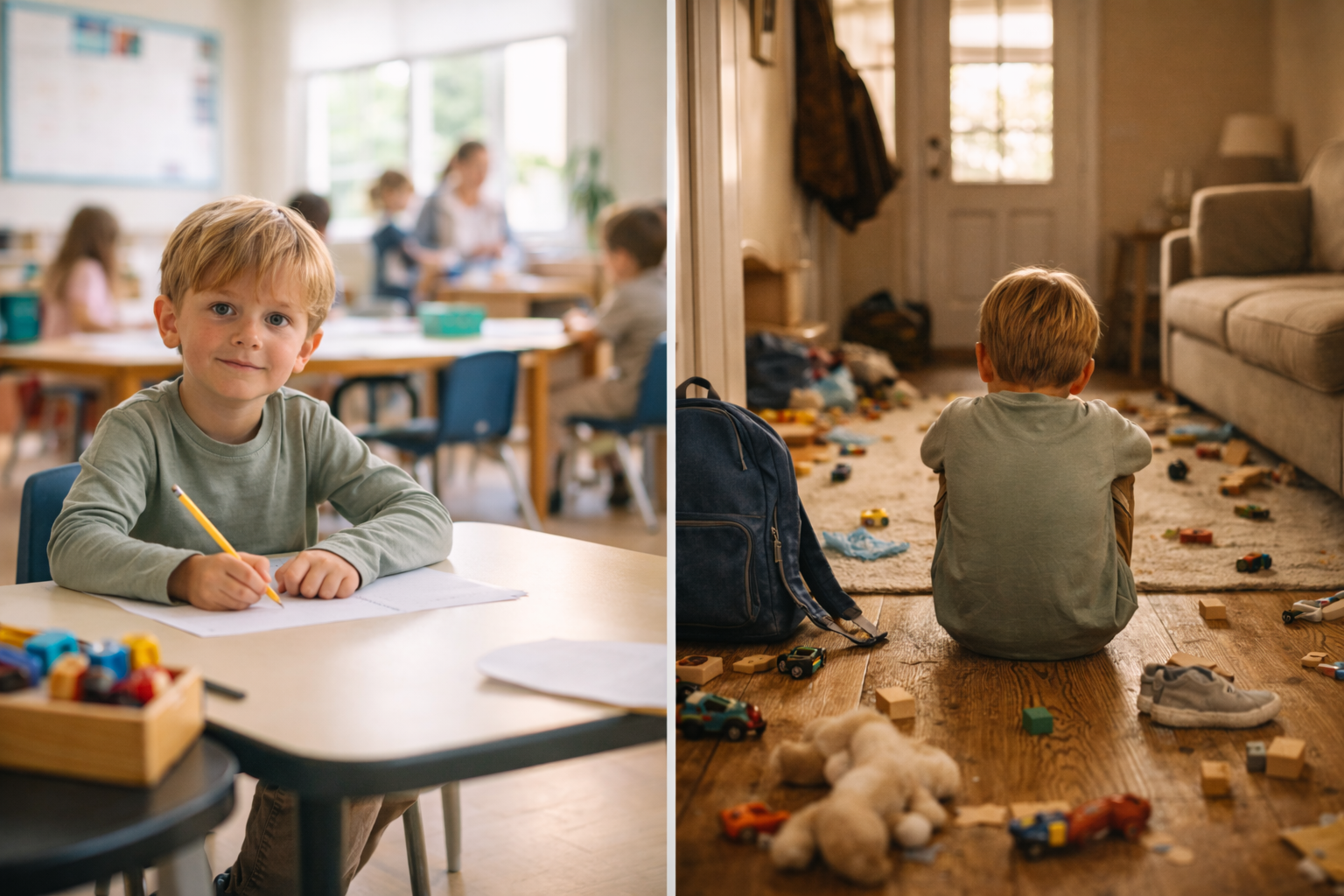
Many toddlers appear calm at school but melt down at home. This pattern is often linked to emotional fatigue and transitions after a structured day. When children feel safest with their caregivers, their nervous system may release the feelings they held in all day.
It often happens the same way…
You pick your child up from school.
The teacher smiles. “They had a great day.”
And within minutes of getting home, the shoes come off, the tears start, and suddenly everything feels too much. Many parents quietly ask themselves the same question:
Is this normal toddler behavior… or is something wrong?
The short answer may feel surprising. Often, these after-school meltdowns aren’t a sign something is wrong at all.
They can actually be a sign your child feels safest with you.
Why Some Toddlers “Hold It Together” All Day
Young children work surprisingly hard in structured environments.
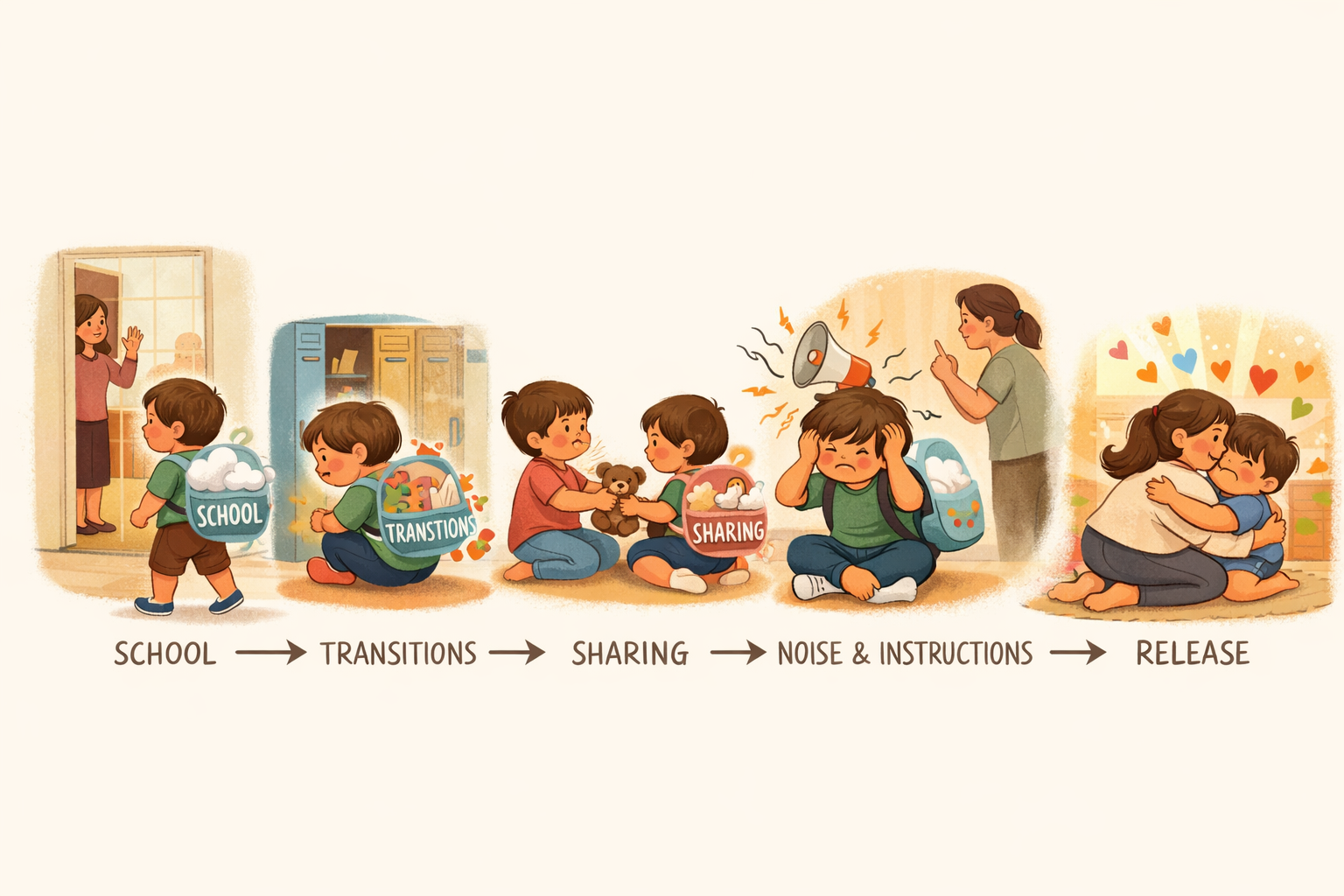
Even when a classroom is warm and supportive, it still asks a lot from a toddler’s nervous system:
• Following directions
• Sharing toys
• Managing noise and transitions
• Being away from their primary caregiver
• Controlling big emotions
For a small child, this can feel like running an emotional marathon. Many toddlers respond by holding their feelings in during the day. They try to stay regulated. They follow cues. They keep the peace.
But emotional energy doesn’t disappear, it builds. And when they return to the place where they feel safest, their system finally releases it.
That release can look like a meltdown.
The “After-School Restraint Collapse”
Child development specialists sometimes refer to this pattern as after-school restraint collapse.
It happens when a child uses a great deal of effort to stay regulated in one environment, and then releases those emotions once they return to a safer space.
Adults do versions of this too. Think about the moment you finally sit down after a long day and suddenly feel the weight of everything you held together.
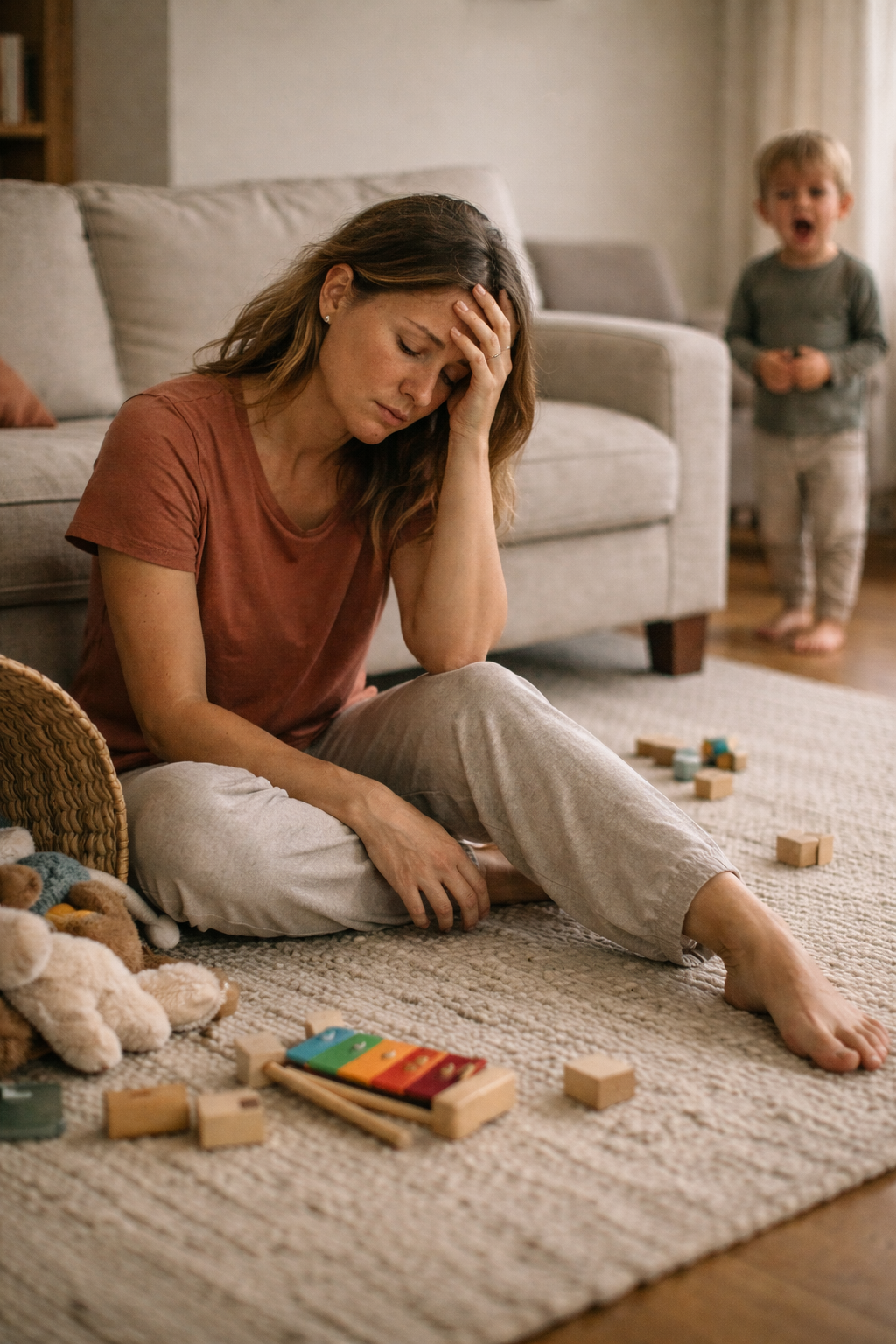
For toddlers, the release can look more dramatic because they’re still learning how to regulate emotions. What parents often see is:
• crying over small frustrations
• sudden clinginess
• irritability or whining
• big reactions to minor changes
To a parent, it can feel confusing. “How were they fine all day… and now this?”
But emotional safety often reveals itself this way. Children tend to fall apart where they feel most secure.
Why This Can Trigger Parental Guilt
When teachers report a “great day,” parents sometimes assume the meltdown must mean they’re doing something wrong. Some even wonder: “Maybe I’m the trigger”. In reality, the opposite can often be true.
Your child may be releasing those emotions with you because your presence signals safety. That doesn’t make the moment easier. But it reframes what’s happening.
The meltdown isn’t necessarily a sign of misbehavior or poor parenting. It may simply be your child’s nervous system unwinding.
Signs the Behavior May Be Part of Normal Toddler Development
Many after-school meltdowns fall within the wide range of normal toddler behavior.
Patterns that parents often notice include:
• meltdowns happening shortly after pickup
• emotional intensity fading after rest, snack, or connection
• relatively calm behavior at school or daycare
• increased sensitivity when tired or overstimulated
Toddlers are still building the internal tools needed to move through strong emotions. Their reactions can look sudden, but they’re often the result of a long day of effort.
Gentle Ways to Support Your Child After School
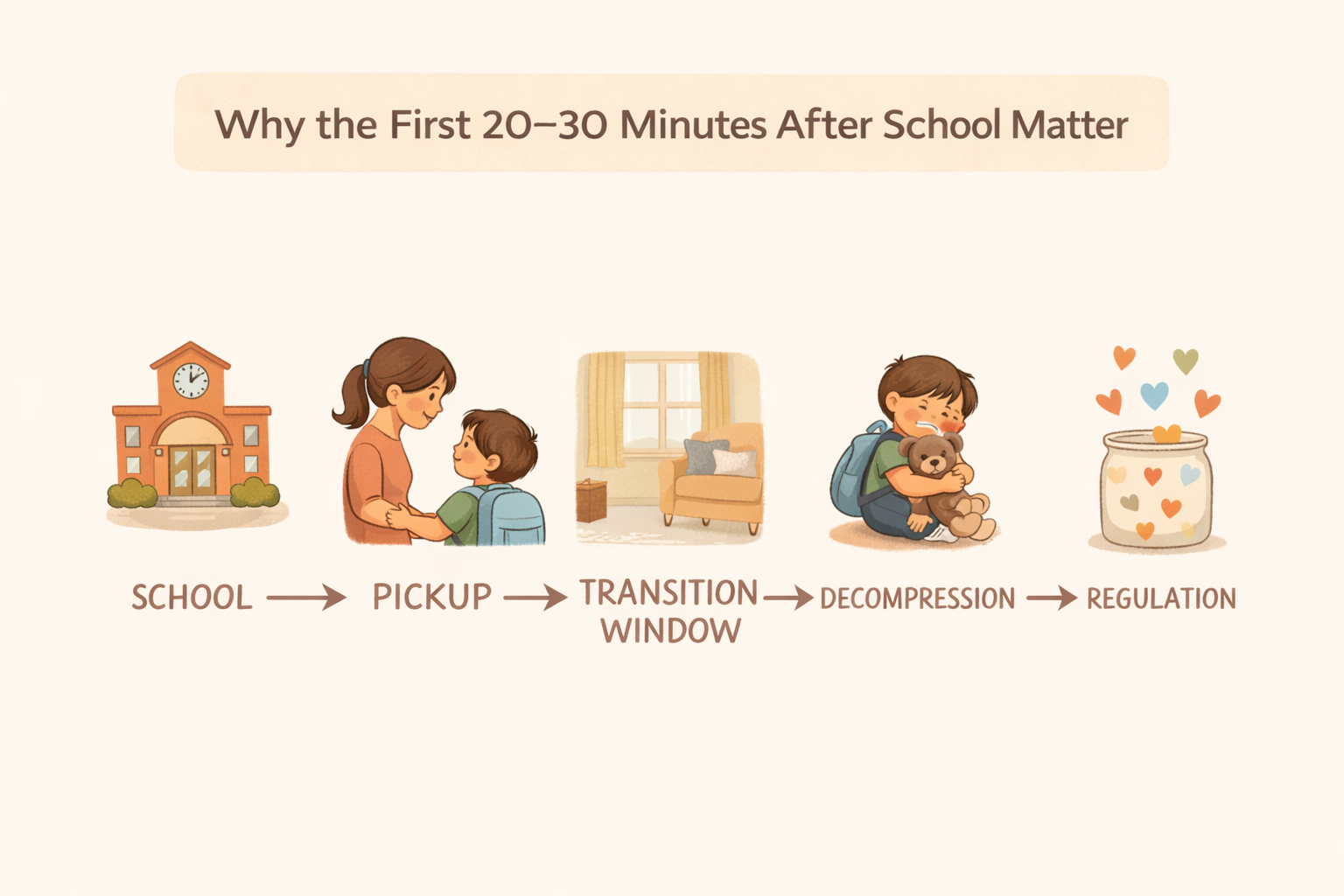
The goal isn’t to prevent every meltdown.It’s to help your child transition from one environment to another. Small shifts can sometimes make that transition easier.
Some families find it helpful to:
Create a predictable after-school rhythm.
A snack, quiet play, or cuddle time can help signal that the day is slowing down.Lower demands for the first 20–30 minutes.
Toddlers may need a short decompression window before new expectations.Offer connection before correction.
When emotions run high, presence often helps more than problem-solving.Watch for signs of overload.
Fatigue, hunger, and sensory stimulation can intensify reactions.
Even with support, big emotions will still happen. That’s part of how children learn.
When Parents Begin Wondering If More Support Might Help
Most toddlers experience emotional swings as they grow. But sometimes parents notice patterns that feel heavier or more persistent over time.
They may wonder:
• Why does my child struggle so much after transitions?
• Why do small frustrations turn into very big reactions?
• Why does the emotional intensity feel hard to settle?
These questions are incredibly common. And asking them doesn’t mean something is wrong. It simply means you’re paying attention.
Sometimes, a supportive conversation with a child therapist can offer clarity, reassurance, and practical tools that make daily moments easier for both parent and child.
FAQ
-
Yes. Many toddlers show different behaviors in different environments. Structured settings can encourage children to hold emotions in, while home often feels like a safer place to release them.
-
Transitions are challenging for young children. Moving from a stimulating environment to home, combined with fatigue or hunger, can overwhelm a toddler’s nervous system.
-
Not necessarily. This pattern is common in young children. However, if emotional reactions feel intense or persistent, a supportive conversation with a child therapist may help provide clarity and guidance.
You’re Not the Only Parent Wondering This
If you’ve found yourself asking “Is this normal toddler behavior?” — you’re not alone.
Parenting young children often includes moments that feel confusing, exhausting, or emotionally heavy.
Sometimes the most helpful step isn’t trying to figure everything out alone, but having a calm place to explore what your child might be experiencing.
The Nurture Path offers therapy and parent support for families navigating emotional development, transitions, and early childhood regulation.
If you’d like to learn more about how we support toddlers and families, you can explore our services below.
→ Explore Our Child & Family Therapy Services
This article is for educational purposes only and does not replace individualized mental health care. If you are experiencing severe distress or thoughts of harming yourself, please seek immediate professional support.
Many emotional regulation strategies are aligned with guidance from organizations such as the American Academy of Pediatrics and the American Psychological Association.
