When You Love Your Kids but Miss Who You Used to Be: Understanding Mom Burnout and Identity Grief
There’s a moment , sometimes in the car after school drop-off, sometimes between meetings, sometimes in the quiet after bedtime , when the thought appears:
-”I don’t fully recognize myself anymore”.
-You love your children.
You would choose them again.
-And still… something feels distant.
-Missing who you used to be doesn’t cancel your love.
It reveals that you are changing.

The CDC also emphasizes the importance of maternal mental health across all stages of parenting.
The Identity Shift No One Talks About
Motherhood transforms you, whether you work outside the home, stay home full-time, run a business, or move between roles depending on the season.
Your time fragments.
Your mental space fills.
Your body, priorities, and relationships shift.
Even when you’re thriving professionally, part of you may feel stretched thin. Even when you’re home full-time, part of you may feel invisible. Many mothers search for stay at home mom burnout help, but what they’re often experiencing isn’t limited to one role.
It’s identity compression.
When one part of your life expands dramatically, other parts can quietly shrink.
And that shrinking can hurt.
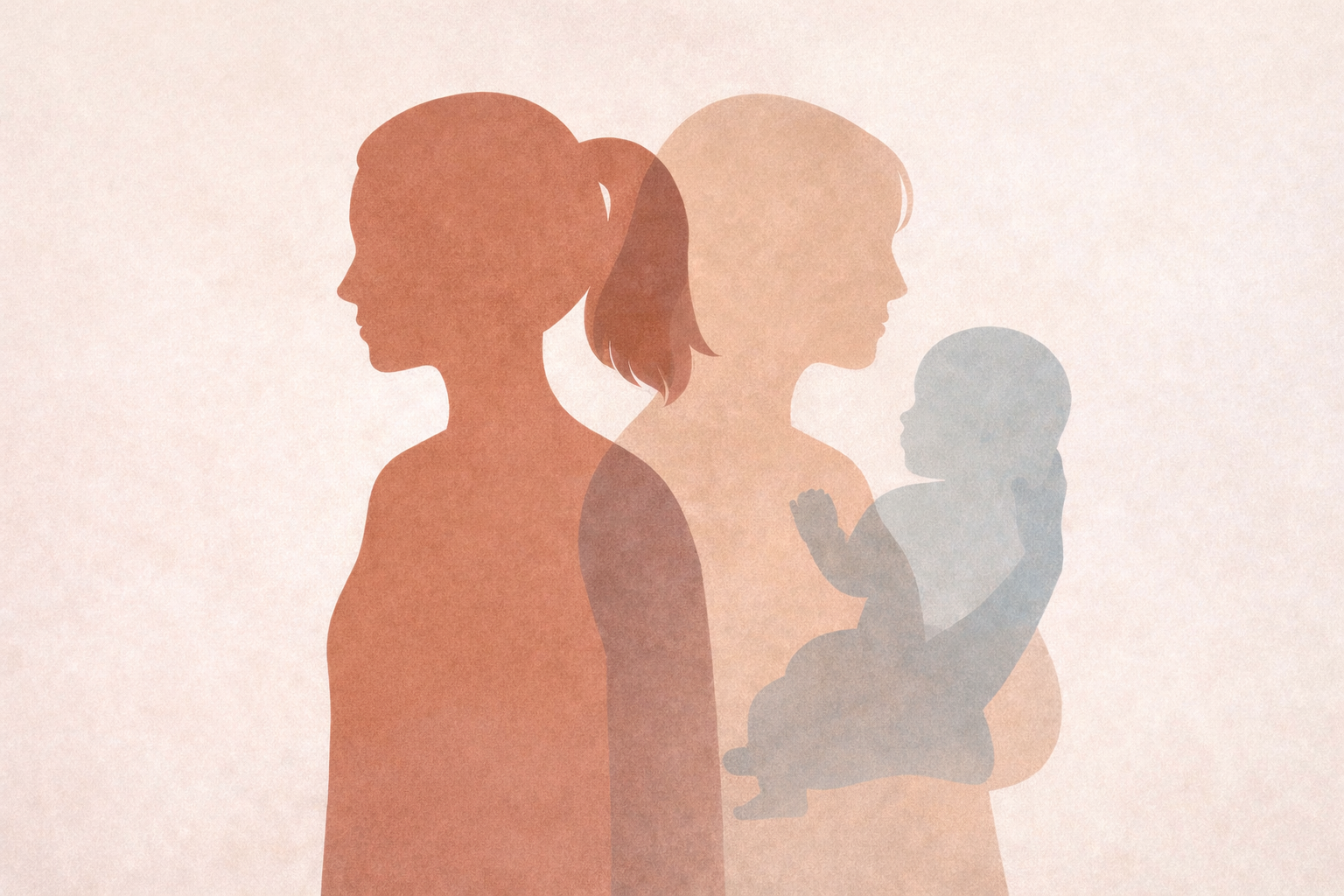
Loving Your Children and Grieving Yourself Can Coexist
Grief is not always loud.
Sometimes it shows up as:
Irritability you can’t explain
Restlessness during moments that are supposed to feel fulfilling
A longing for uninterrupted thought
A quiet question: Is this all I am now?
You might miss:
- The career momentum.
- The spontaneity.
- The version of you who wasn’t constantly needed.
That doesn’t make you selfish. It makes you aware.
Identity grief is not a rejection of motherhood. It’s a signal that parts of you need tending, too.
Burnout Isn’t Only About Exhaustion: Why Moms Search for Stay at Home Mom Burnout Help
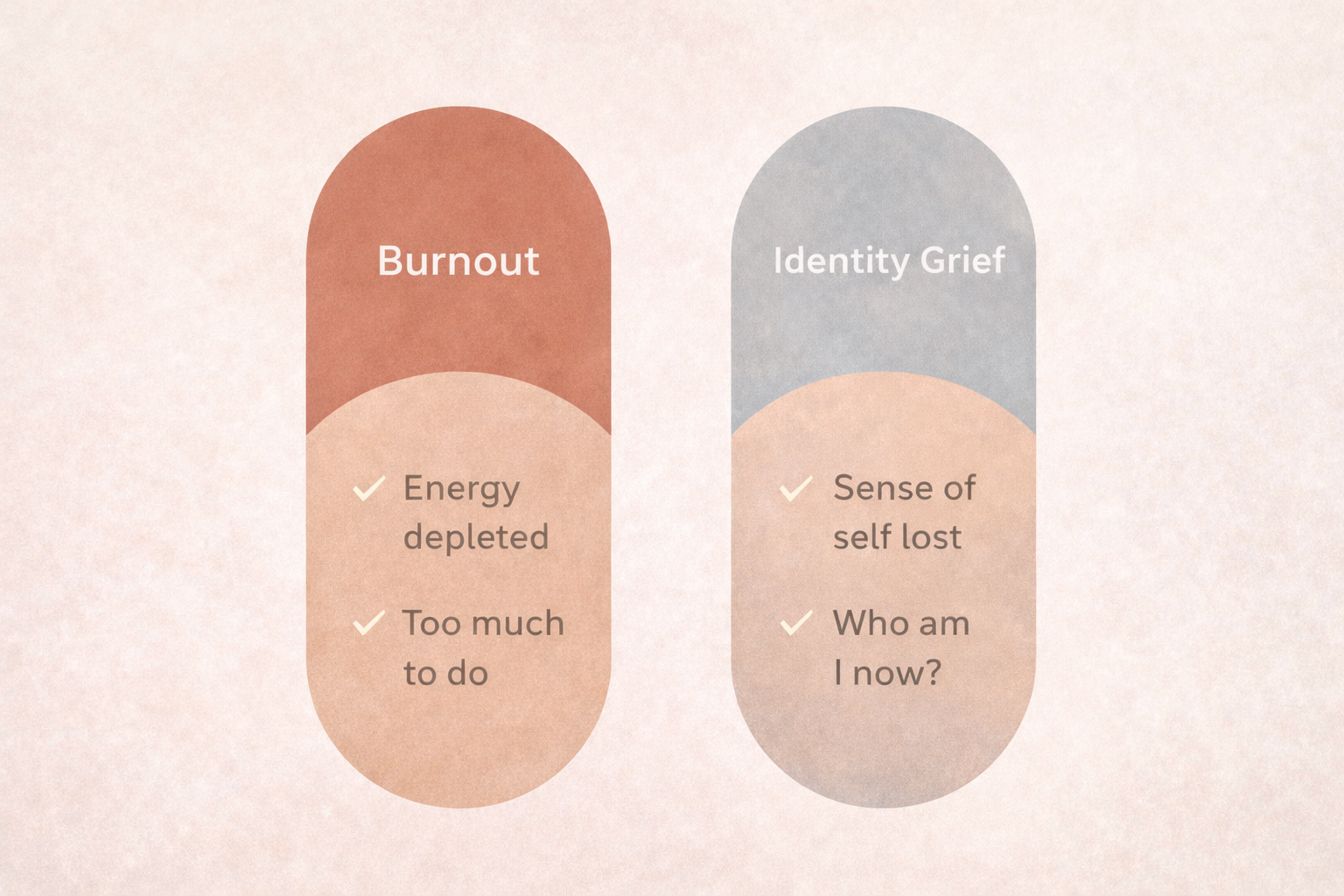
Burnout is often framed as physical fatigue.
But many mothers experience something deeper.
Whether you’re answering work emails after bedtime or managing the emotional load of the household all day, your nervous system may rarely power down.
You are:
Always tracking.
Always anticipating.
Always responsible.
Even joy can be draining when there’s no space to just be.
When women search for stay at home mom burnout help, what they often want is relief — not from their children, but from feeling erased.
Burnout can grow when your identity narrows to a single role.
Integration, Not Erasure
You don’t need to return to who you were before children. And you don’t need to sacrifice yourself to be a good mother.
Integration is different from going backward.
It might look like:
Protecting one small ritual that belongs only to you
Reclaiming a hobby without monetizing it
Saying out loud, “This transition is harder than I expected.”
Letting ambition and attachment coexist
You are allowed to be multidimensional.
Motherhood adds layers. It doesn’t require you to dissolve.

When Support Creates Space to Breathe
Many mothers carry this tension silently because it feels disloyal to admit.
But saying, “I love my kids and I miss myself,” is not a betrayal.
It’s an honest reflection of growth.
Therapy can offer space to explore:
Who you were
Who you feel pressure to be
Who you want to become now
Stay at home mom burnout help may be the phrase typed into a search bar — but what many women truly need is room to expand again.
Not away from their children.
Within themselves.
FAQ
-
Yes. Identity shifts are common in motherhood, regardless of whether you work outside the home or stay home full-time.
-
Many cultural messages equate good motherhood with self-sacrifice. In reality, autonomy supports emotional health and strengthens relationships.
-
Identity grief centers on adjustment and loss of former roles. If you’re experiencing persistent sadness, hopelessness, or loss of interest in daily life, speaking with a licensed professional can help clarify what’s happening.
-
Yes. Therapy isn’t only for emergencies. It can support transitions, burnout, and identity changes before they intensify.
This article is for educational purposes only and does not replace individualized mental health care. If you are experiencing severe distress or thoughts of harming yourself, please seek immediate professional support.
